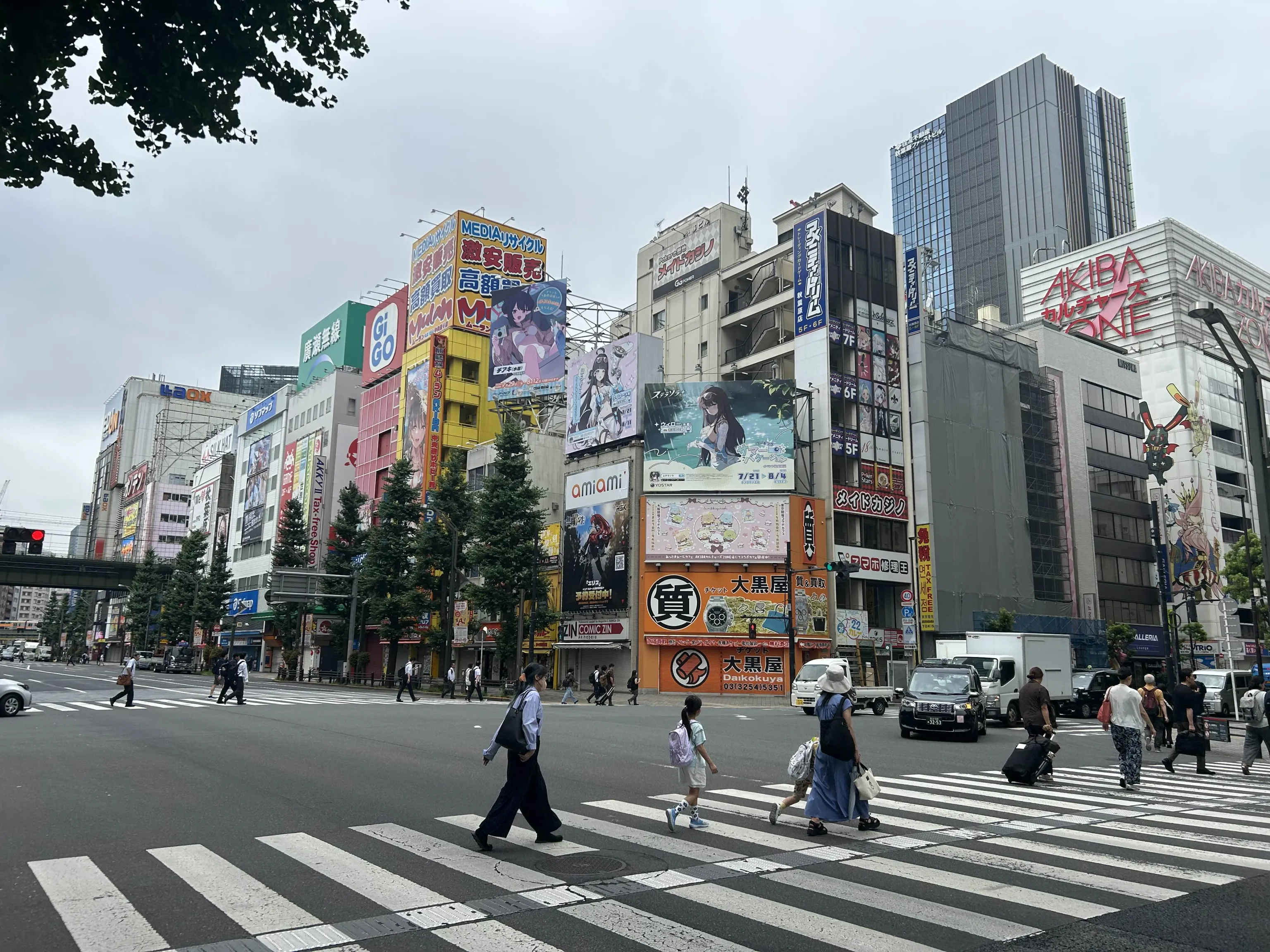
Renting a House in Japan
In November 2025, I completed my second move in Japan. This time, there were more twists and turns than the first. I gained a deeper understanding of Japan's rental system and wanted to share my experience.
The primary goal of my first rental was simply to have a place to live, as I quickly moved out of a colleague's house in the countryside of Saitama. With a spirit of adventure, I wanted to try renting a place through a Japanese agent using my limited Japanese, so I wasn't too picky about the property. In the end, I successfully rented a relatively good property, a newly built apartment completed in May 2023, and became one of the first residents. The facilities were brand new, with a heated toilet seat, free broadband internet, and a garbage room where I could dispose of trash 24/7, as long as I sorted it properly. However, its downside was that it was located in Katsushika Ward, "Horikiri Shobuen," which is somewhat remote in northeastern Tokyo, and I wasn't very satisfied with the location. At that time, my workplace was in Shinjuku, northwest Tokyo, and my daily commute took 50 minutes one way, which was quite exhausting.
For this move, I decided not to make any compromises and insisted on achieving a satisfactory balance in terms of price, location, and layout. Therefore, I found a Chinese agent, and communication was no longer a barrier, allowing me to focus on selecting the property itself.
As many may know, all housing prices in Japan are public, and real estate agents only earn service fees. However, there were several people applying for the property through a guarantee company (see "First Encounter with Japan"). This information is also public. The guarantee company reviews candidates in the order of submission. If someone has already applied, that house is basically theirs. The probability of the guarantee company rejecting someone is very low. If they do reject, the next person in line is automatically reviewed.
For example, I was interested in a property near the Yamanote Line's Tabata Station and said I would think about it. After considering it for just one night, the next day the system showed that someone had already submitted an application for that property. The agent told me to look at others, as that house was likely taken.
This seemingly transparent system still led me to encounter a pitfall, forcing me to recalibrate my understanding based on real-life lessons. I applied for a property in Bunkyo Ward, near Suidobashi. It was a 17-minute train ride to Ueno, 17 minutes to Ikebukuro, 15 minutes to Akihabara, 30 minutes to Shibuya, and a 20-minute walk to the Imperial Palace. The location was excellent, with the only downside being that the property was somewhat old, but after investigation, I found that its earthquake resistance rating was fine. At that time, there were no other applicants, and it felt like a great find, with the agent even congratulating me on my luck. I excitedly submitted my application, thinking I would soon move from Katsushika Ward to Bunkyo Ward, and even boasted to my Japanese colleagues during lunch about my upcoming move to Suidobashi. However, after waiting for more than a week without any response, the agent also found it strange. But everyone believed that since the guarantee company reviewed applications in order, there shouldn't be any issues.
Two weeks later, the property company informed the agent that they had "dropped" my application. It dawned on me that the property company knew their house was highly valuable and in demand, so they intentionally held back the applicants' information to collect more and then select the best candidates. My application as a foreigner was likely overshadowed. If my information had reached the guarantee company, it would have been almost guaranteed to be mine, but my application was stuck at the property company and never made it to the guarantee company. I wasted two weeks because of this, and I had already agreed on a move-out date with the guarantee company of my current residence, making the timeline tight. The agent then arranged for an additional person to help me find a property. He had been in the industry for many years and had never encountered such a situation before.
I once saw a Chinese blogger who had lived in Japan for many years and whose wife was Japanese, discussing his experience helping Chinese students find housing in Tokyo. The Japanese agent told him that a property was available, only to later say it was no longer available as it had been rented out. This blogger was furious. After a while, they said the property was available again, which made him even angrier, cursing the decline of the Japanese service industry. I suspect his situation was similar to mine, where the agent couldn't distinguish between the guarantee company's review and the property company's review, and the extremely rare case where other candidates made it to the guarantee company but were rejected.
Earlier, I mentioned the experience of moving out, so here’s a bit about that. First, I found my original rental contract and contacted the guarantee company at that time. They told me they no longer managed my rental contract and mockingly said they wouldn’t respond to anything I sent. Hearing this complaint, I recalled receiving a document stating that my house had been sold to an elderly lady, but I thought it was just a notification and put it away. I dug that document out again and realized I had indeed made a mistake. It turned out that this old document was not just a notification but a contract that required my signature and return, even though I was just a tenant. I don't know if this transaction fell through because of me, but I probably became classified as a bad asset, leading them to sell my rental contract to another guarantee company. I apologized to the guarantee company for my ignorance and asked which guarantee company I should contact for my move-out, but to my surprise, no matter how much I pressed, they stopped responding. They might not have kept records or remembered which company my contract had been sold to, or they might have just wanted to punish me with deliberate neglect.
Later, I called the property company and finally learned that my contract was now guaranteed by いえらぶ, and I could apply for a move-out on their website. Moving out required agreeing on a meeting date, and the house had to be cleared and restored to its original state before that date. On the day of the meeting, it was just a key handover; the いえらぶ staff looked around, inspected for damages, and finally asked me to pay 20,000 yen for restoration fees. I was a bit surprised; although I had kept a cat for a while (see "Rescuing Stray Cats in Tokyo"), and the wallpaper had some peeling, I considered myself very clean and often tidied up, believing I wouldn’t lose to any Japanese housewife in terms of cleanliness. Sure enough, a few days later, they emailed me saying they had made a mistake, and I only needed to pay 5,000 yen. They probably initially thought the toilet was broken, but it was just a settings issue.
Finally, let me talk about how I rented my new place. First, I told the agent my rental budget and the target stations I wanted to be near. The agent provided me with many candidate properties. Next, as a Chinese otaku, I had some places I wanted to frequent: Ueno, Shibuya, Ikebukuro, Shinjuku, and Akihabara. I checked the travel times to these locations. Then, as a foreigner, I also looked at the distance from the property to Narita and Haneda airports. Of course, since no one flies every day, this was just a reference to have a general idea. After selecting suitable locations, I checked other conditions of the properties, such as layout, whether there was a garbage room (if not, I had to strictly wake up early to dispose of trash at designated times and places), whether there was parking, whether it was wooden or concrete (wooden houses are cold in winter and hot in summer), and the year it was built (the two earthquake resistance standards are 1981 and 2000; houses built after 1981 are unlikely to collapse in significant earthquakes).
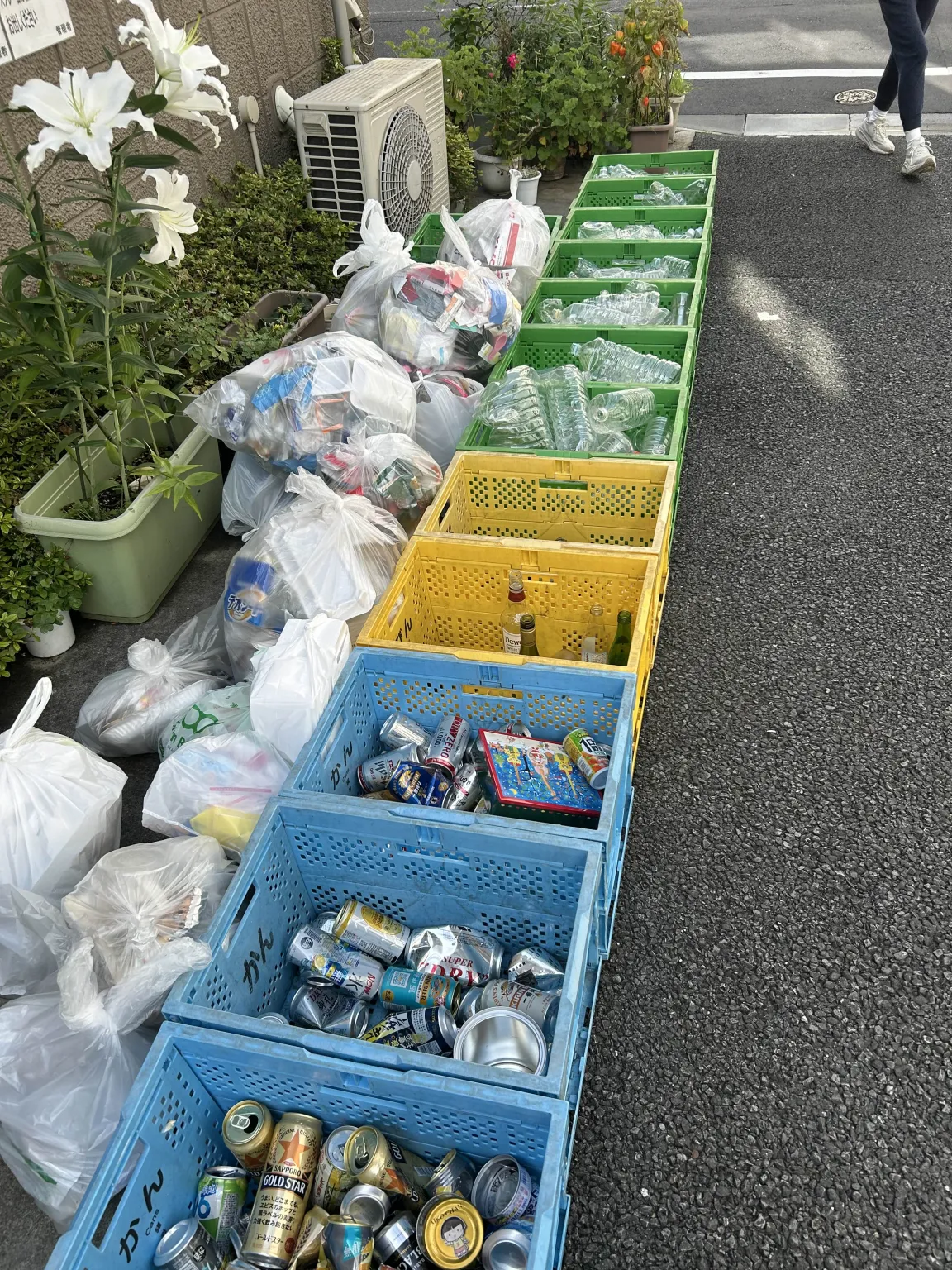
In the end, I chose a house in Taito Ward. It takes 25 minutes by train to my workplace in Nihonbashi, 20 minutes by bike. It's a 15-minute walk to Ueno Station, 15 minutes to Nippori, 10 minutes to Nezu Station on the Chiyoda Line, two stops to Akihabara, 30 minutes to Shibuya, 25 minutes to Ikebukuro, and 30 minutes to Shinjuku. To Narita, I can take the Skyliner directly from Nippori, which takes 40 minutes. To Haneda, I take JR and then the monorail, which takes 45 minutes. On nice days, I ride my luup to work, passing through Akihabara every day. The downside is that it's an old house and doesn't have a garbage room, but the earthquake resistance is fine. Regarding the garbage disposal issue, after negotiating with the property management, I can throw out trash the next morning after dawn. Moving from a corner of Tokyo to the city center, the rent plus management fees turned out to be about the same as my previous rent, and overall, I am very satisfied.