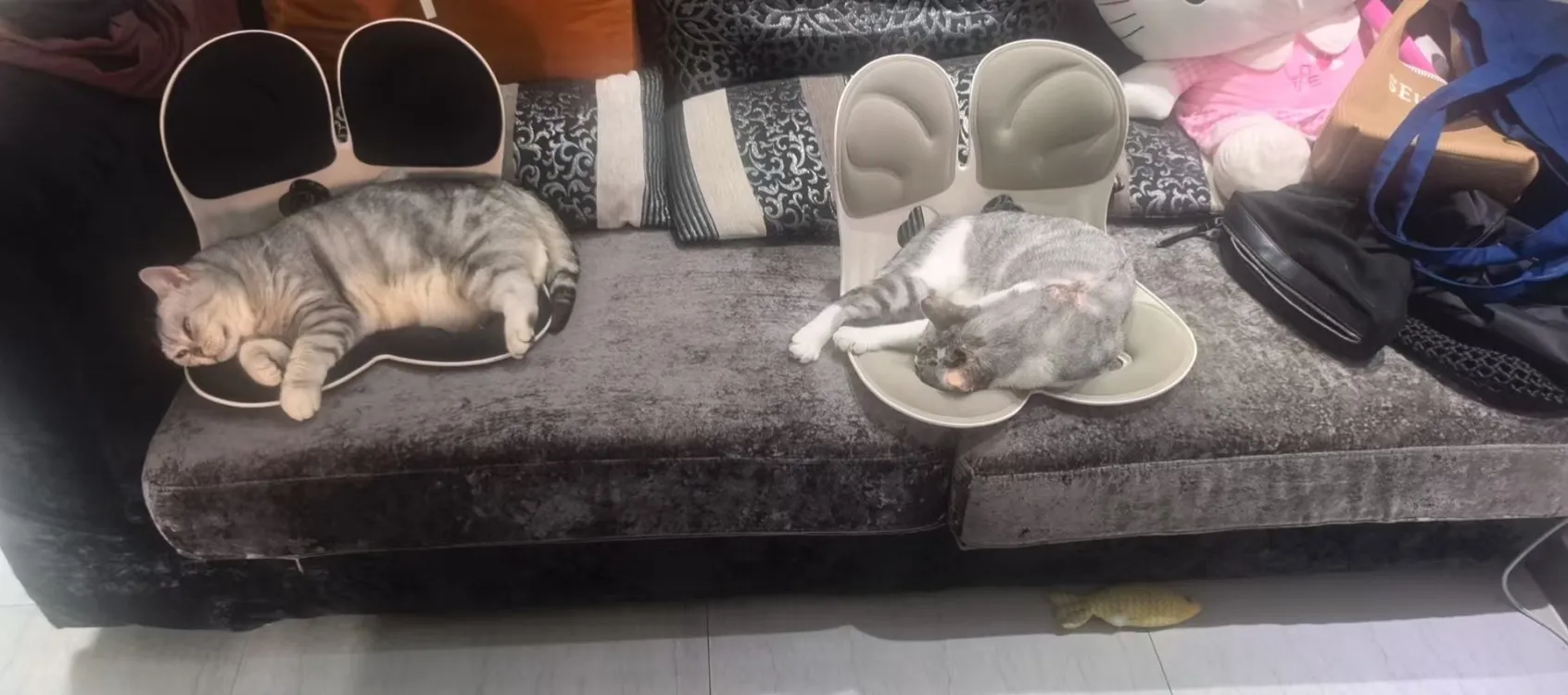
About Rescuing a Stray Cat in My Hometown
I previously wrote about rescuing a stray cat in Tokyo in Chinese, but this time I will write about rescuing a stray cat in China in Japanese.
I had a meal with a friend I had known since elementary school, who is now working as a pilot for a local airline in my hometown. He brought along some friends from the aviation industry.
After the meal, I spotted the stray cat in the parking lot next to the restaurant. My first impression was that the cat was very friendly.
I quickly noticed that the cat had a significant wound on its skin, which looked like it was about to peel off.
Unfortunately, I had plans to go somewhere else, so I had no choice but to leave the cat behind.
The next day at noon, I consulted with my parents about adopting the stray cat, but they refused. The reason was that we already had another cat, and adding a new one might be tough on the existing member.
However, my parents are generally the type of people who often feed stray cats around.
I tried to convince them by saying, "If you don't rescue the stray cat until the end, it's better not to feed it, as it causes stray cat problems in the town," and "This way of doing things is more correct than just feeding them," but I failed.
Even if I couldn't keep it at home, I still wanted to catch it. I thought I could somehow find a foster home for it. That afternoon, I went back to the restaurant.
Before going, I bought a box and some wet cat food nearby. Unlike the friendly but cautious stray cats in Tokyo, this cat showed no wariness towards humans, so I thought this would be enough.
When I arrived, the cat was not at the spot from the previous night. When I asked the owner, she confirmed that the stray cat had been seen around but didn't know where it was now.
I told her to let me know if she saw it again and exchanged WeChat contacts with her.
Just as I was about to leave, the stray cat appeared! I quickly set up the box and placed an opened can inside. It was easily caught. Even though I was already in a taxi, it seemed completely focused on the wet food and didn't realize it had been caught at all.
First stop was the animal hospital. After a diagnosis, it turned out that the skin wound looked like it had been burned with boiling water. Additionally, its whiskers were singed, and there were wounds around its neck as if it had been strangled. Someone must have done something terrible to it.
The treatment began with removing the dead skin.
When discussing with my parents, my mother seemed to oppose more firmly than my father, so I informed my father that the cat had already been to the hospital. I had to return to Japan a few days later.
While searching for a foster home, I added my father to the chat group with the veterinarian. He reluctantly visited the cat at the hospital.
In the end, my parents had little resistance, and they accepted the cat. Since there was a peeled area on its neck, my parents named it "Kato," which sounds similar to "加藤真央" in Japanese, based on the Nanchang dialect pronunciation (kā tóu māo).
Challenge One: Care after discharge.
Even after discharge, Kato's skin had not fully healed. It couldn't be vaccinated, and it couldn't live with the other cat at home. Although my father initially opposed it, he brought Kato back to his office. He applied skin medication every day. At that time, I still hadn't told my mother that Kato was already in my father's office.
Challenge Two: Entering heat.
When I got home, the smell was unbearable for my mother's mahjong friends, and Kato's cries were so loud that they couldn't sleep at night. Since Kato was always crying towards the window, it was likely that other female stray cats around the house were in heat, which caused Kato to go into heat as well. Since Kato was still recovering, it couldn't undergo neutering surgery, so my parents had to endure a lot during that time. I felt sorry for my parents. When I suggested looking for a foster home, my mother, who had initially opposed it the most, said, "This child has a peeled area on its neck, so it's not clean, and no one will want to adopt it," so Kato remained at home.
Challenge Three: Getting along with the existing cat.
As you can imagine, the existing cat's name is Shacho. Since Kato had not been vaccinated, it was initially kept in a separate room, and its loud cries made Shacho very anxious, causing it to lose a few kilograms.
Even while writing this, Shacho and Kato still have occasional fights. My parents really like Shacho, so no matter how good the food is, they always prioritize Shacho. Kato seems to know this rule and always waits next to Shacho. But there are still fights. Observing the fights, it seems that Kato wants to play with Shacho, but Shacho has only lived with humans from the beginning, so it doesn't know how to play with other cats and sees Kato as an enemy.
Before Kato arrived, Shacho would leave the wet food in the bowl and eat at its own pace. Now, it has to eat quickly, or Kato, who has already finished its portion, will eat all of it. In the end, Shacho can only eat quickly. I feel sorry for Shacho too.
In satisfying my own compassion, ultimately, it was not me but my family members, my parents and Shacho, who paid various prices. I think it might be better to hold back on such things.