The Pinnacle of Chinese Historical Dynasties - Song
Chen Yanke said: "Our Chinese culture, after thousands of years of evolution, reached its peak during the Zhao Song era." After reading Wu Gou's "Talking about Song" and "Elegant Song," I believe:
- The Song Dynasty was the era with the highest living standards for the people of ancient China;
- The Song Dynasty had a political and economic system that was closest to modernity, with the embryonic form of parliamentary system already formed, a thousand years earlier than Europe;
- The Song Dynasty was the era with the highest level of commerce and industry in ancient China.
Political System
The prime minister has always been a very important position in ancient China. This is because the emperor's personal energy is limited, and there must be someone dedicated to handling government affairs. Zhu Yuanzhang was a model worker, and Zhu Di was also good, but model workers are few, and their descendants were not up to par. The Ming Dynasty eliminated the prime minister but allowed the cabinet's chief and the eunuchs in charge of ceremonial affairs to take turns. The Qing Dynasty inherited the Ming system and went further by eliminating the cabinet chief, but had to create a military minister. This is akin to the development of things not being able to violate natural laws; the limits of an object's motion are constrained by the speed of light, and a person's limited energy leads to a power vacuum if one person tries to monopolize all power, which is something power fears the most, as others will quickly fill the void.
The constraints on imperial power took shape during the Tang Dynasty and reached their peak during the Song Dynasty. During Wu Zetian's era, the political system was quite broken, and there was a saying recorded in historical texts: "Without going through the Phoenix Pavilion and the Luan Platform, how can one issue an edict?" (The Central Secretariat was referred to as the Phoenix Pavilion and Luan Platform during the Wu Zhou Dynasty). By the time of the Song Dynasty, the constraints on imperial power had advanced further, with the emperor ruling in a low-profile manner. There were no party struggles during the Song Dynasty, and the so-called Wutai Poetry Case was not as most people understand it. The head of the government was the prime minister, and the Tai Jian system exercised the role of supervision and advice, mutually restraining each other. If the Tai Jian collectively cast a vote of no confidence against the government, the prime minister had to resign according to the rules. This was a near-modern parliamentary system.
The Song people had clear discussions about this. They believed that the emperor was the Son of Heaven, who would not make mistakes and could not make mistakes. If someone who cannot make mistakes is making decisions, how can accountability be assigned for wrong decisions? Therefore, the emperor cannot make decisions personally; the decisions are made by the prime minister. If the prime minister makes a wrong decision, he can be dismissed or resign.
Generally, people believe that imperial edicts are issued by the emperor, but in ancient China, imperial edicts belonged to the central government's official documents. In the Song Dynasty, drafting an imperial edict required an extremely strict process, and every responsible person at each stage had to sign the document. The power balance system of the Song Dynasty can be seen from one example.
In the early years of the Xining era, Wang Anshi's reforms received support from Emperor Shenzong of Song, with the monarch and prime minister working as one. Wang Anshi, as the head of the government, wanted to implement reforms, while the Tai Jian system believed that the steps were too large and posed obstacles to the reforms. At this time, Wang Anshi wanted to send a person named Li Ding into the Tai Jian, asking Emperor Shenzong for help. What should Emperor Shenzong do?
The emperor's intention to appoint Li Ding was called "the word head," which, according to the rules, had to be sent to the Sheren Yuan, where the Chief of the Secretariat (after the Yuanfeng reform, it became the Chief of the Central Secretariat) would draft it into a formal edict, and it would take effect after a series of complex procedures. The Chief of the Secretariat in the Song Dynasty was on a rotation basis. The Chief of the Secretariat who received the emperor's word head that day was Song Minqiu, a well-known bibliophile. Song Minqiu unceremoniously returned the word head to the emperor, saying that this was an irregular promotion, and the personnel appointment did not comply with the rules, so he dared not draft it. This was the legal power of the Chief of the Secretariat (or the Chief of the Central Secretariat), called "returning the word head": "If there is an improper matter or the appointment is not suitable for the person, it shall be reported and the word head shall be returned." After Song Minqiu returned the word head, he did not want to get involved further and requested to resign due to illness.
Counting this time, can you guess how many times the word head for Emperor Shenzong's appointment of Li Ding was returned by the various Chief of the Secretariat in the Sheren Yuan?
A total of nine times.
The first time, it was returned by Song Minqiu, saying it did not comply with the rules. The second time, it was returned by Su Song, saying that Li Ding's appointment did not meet the conditions. The third time was by Li Dalin, the fourth time by Su Song again. The fifth time, Emperor Shenzong said that there had been a legislation last year, which clearly stated that if the Inspectorate was short of personnel, one could "choose someone to act regardless of official rank." Su Song said that we have studied last year's law, and the legal text states that "those who are not limited by official rank" only indicates that the candidates for the Tai Jian officials can be limited to those above the Doctor of Taichang, and does not mean that someone like Li Ding, a staff officer, is also qualified to serve as a Tai Jian historian. He said:
We speak out not to avoid the punishment of the axe and halberd, but to cherish the court's legal system and to abide by the duties of the officials.
The sixth time, it was returned by Su Song again. The seventh time, Emperor Shenzong said, "The removal of Li Ding is a special decree and does not violate the current system." Su Song still refused and said that if it was indeed the emperor's intention to promote him, then he must be a very special person and should undergo "democratic evaluation":
Your Majesty listens to the opinions of the public, or consults with close ministers. If they say that Ding's talent is indeed worthy of your special decree, then I will accept the blame for my reckless words; if my words are not false, I request a different official position for him, to be placed in the capital, and wait for another time to see his actual situation, it will not be too late to promote him.
The eighth time, Su Song still returned it, and his reason was very simple: today is not his duty day, and the edict does not belong to him to draft. Hey, today I am not on duty! The word head was passed to the hands of Li Dalin, who was on duty, and Li Dalin returned it again, making it the ninth time. For the end of the story, those interested can check it out; Li Ding ultimately did not manage to serve in the Tai Jian.
An emperor wanting to appoint an intern inspector was actually rejected nine times in a row by his secretarial staff, and these people would not face any life-threatening consequences. This is not the kindness of a particular emperor, but rather the political atmosphere of the entire Song Dynasty was like this. The constraints on imperial power can be seen.
My middle and high school history textbooks say this is bureaucratic redundancy. What is this? This is putting power in the cage of the system.
Judicial System
In "Knowing Song," there is an article discussing a case where a woman attempted to kill her husband. The county court could not handle it and had to go to the state court. The state judge made a ruling, which was sent to the higher court for review, and the higher court overturned the state court's ruling. The state judge was dissatisfied and wrote to Emperor Shenzong of Song. In the end, it was decided that Hanlin scholar Wang Anshi and Sima Guang would deliberate together. This case involved the laws of the Song Dynasty, the judicial system, and the determination of voluntary surrender and attempted crimes, and the article is written very brilliantly. Coincidentally, the author Wu Gou also publicly published the complete article, and I will directly paste the link: A Great Judicial Debate From this case, we can see that the Song Dynasty's judicial system protected the rights of criminal defendants.
To Kneel or Not to Kneel
When people mention the Song Dynasty, they might think of the dark and corrupt court depicted in "Water Margin." However, ancient people, like modern people, also understood how to use the past to satirize the present. For people in the Ming Dynasty, the Song Dynasty was also ancient, and writing a well-researched historical novel was not that simple. The depiction of the Song Dynasty court in "Water Margin" comes from the author's life experience and is actually a reflection of the Ming court. We can see this characteristic in many ancient literary works.
When discussing ancient human rights, the first thing that comes to mind is that everyone had to kneel before the emperor and even before officials. This is actually an impression left by the Qing Dynasty, which is closest to us. From ancient times to the Qin and Han dynasties, kneeling was not an act that diminished one's dignity because, at that time, there were no chairs. By the time of the flourishing Tang and late Tang periods, people in the Central Plains began to use chairs. By the Song Dynasty, chairs became popular in ordinary households. Did the common people in the Song Dynasty have to kneel when they saw the emperor? One can tell by looking at the paintings created by the people of the Song Dynasty.
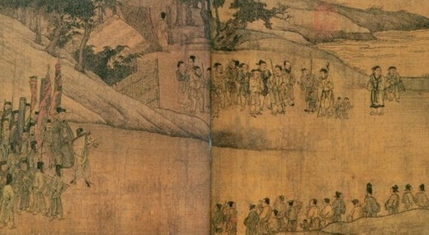
The "Welcoming the Emperor" painting, collected by the Shanghai Museum, was painted by a court painter of the Southern Song Dynasty. In the painting, the empress dowager's status is as noble as the emperor's, but the surrounding common people are in a very casual and natural state, completely as spectators.
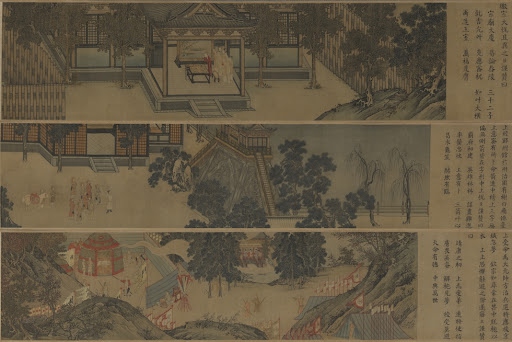
The "Zhongxing Ruiying Tu" by Xiao Zhao of the Southern Song Dynasty, at this time Zhao Gou was already the emperor, and this painting was also meant to illustrate Zhao Gou's legitimacy, but the painting does not depict kneeling common people, which indirectly confirms that there was no strong awareness of "kneeling to welcome the holy carriage" at that time.
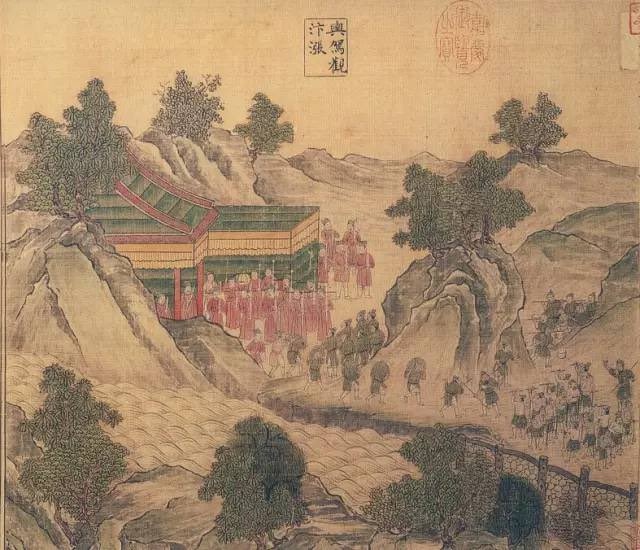
The "Yujia Guan Bian Zhang" in the collection of the National Palace Museum in Taipei depicts Emperor Zhenzong of Song inspecting the river embankment. It can be seen that the river workers are doing their jobs. This at least indicates that when a Song Dynasty painter depicted the scene of the emperor visiting the people, he believed that there was no need to show a close-up of a subject kneeling to welcome the holy carriage.
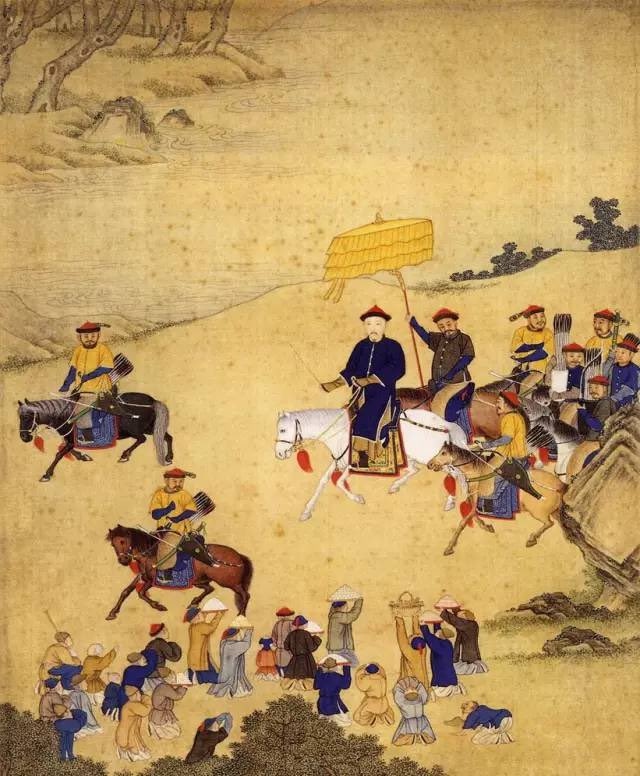
In contrast, the "Kangxi Emperor's Inspection" shows that the painter not only depicted kneeling common people but also made them particularly small while portraying the emperor as particularly large.
Not only did they not need to kneel, but even when common people saw the emperor's carriage, they did not have to deliberately make way. The common people of the Song Dynasty could visit the royal gardens, and when they saw the emperor's carriage, they would just cheer and celebrate, rather than kneel in fear. There are many literary records on this.
Conclusion: People in the Song Dynasty did not need to kneel before the emperor. From the issue of kneeling, we can also see how the oppression of personal rights by imperial power has changed. At least in the Song Dynasty, we common people did not have to kneel.
Song Dynasty Painting
When we talk about national painting, we often think of black and white ink paintings, fine brushwork, which is quite different from Western realistic painting.
However, the paintings of the Song Dynasty were very close to modern Western realistic painting. And we know that modern realistic oil painting in the West had to wait until the Renaissance.
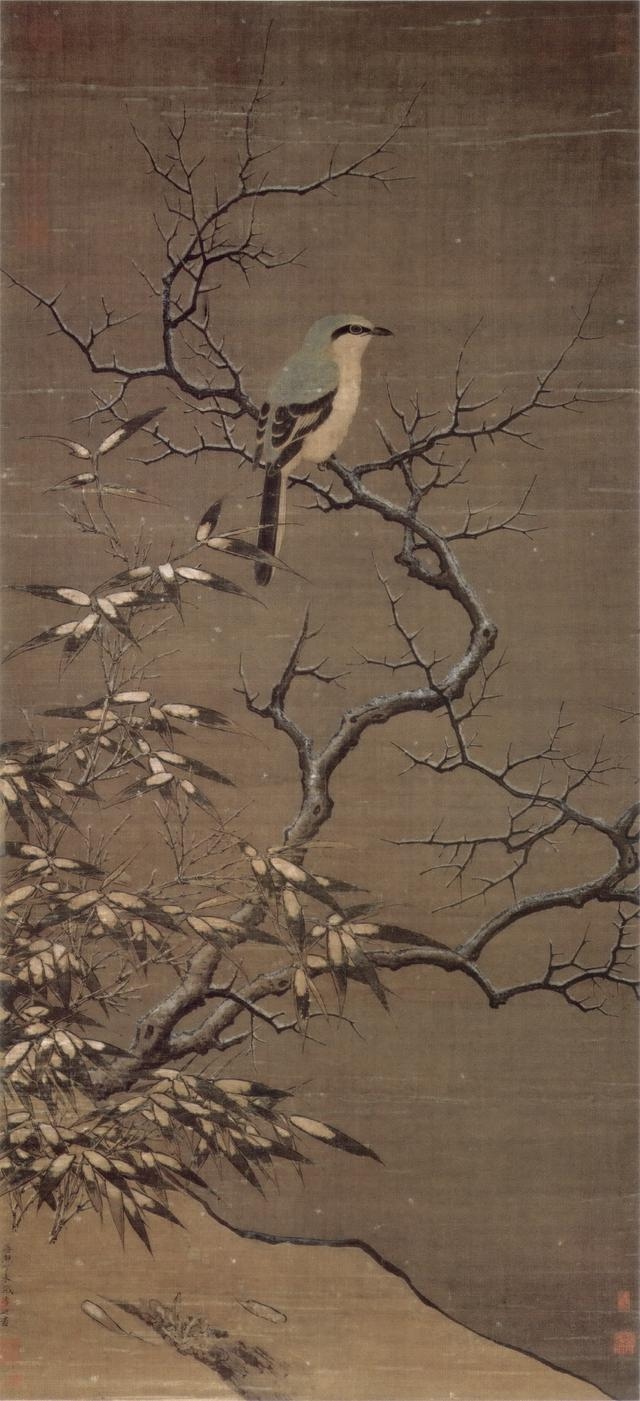
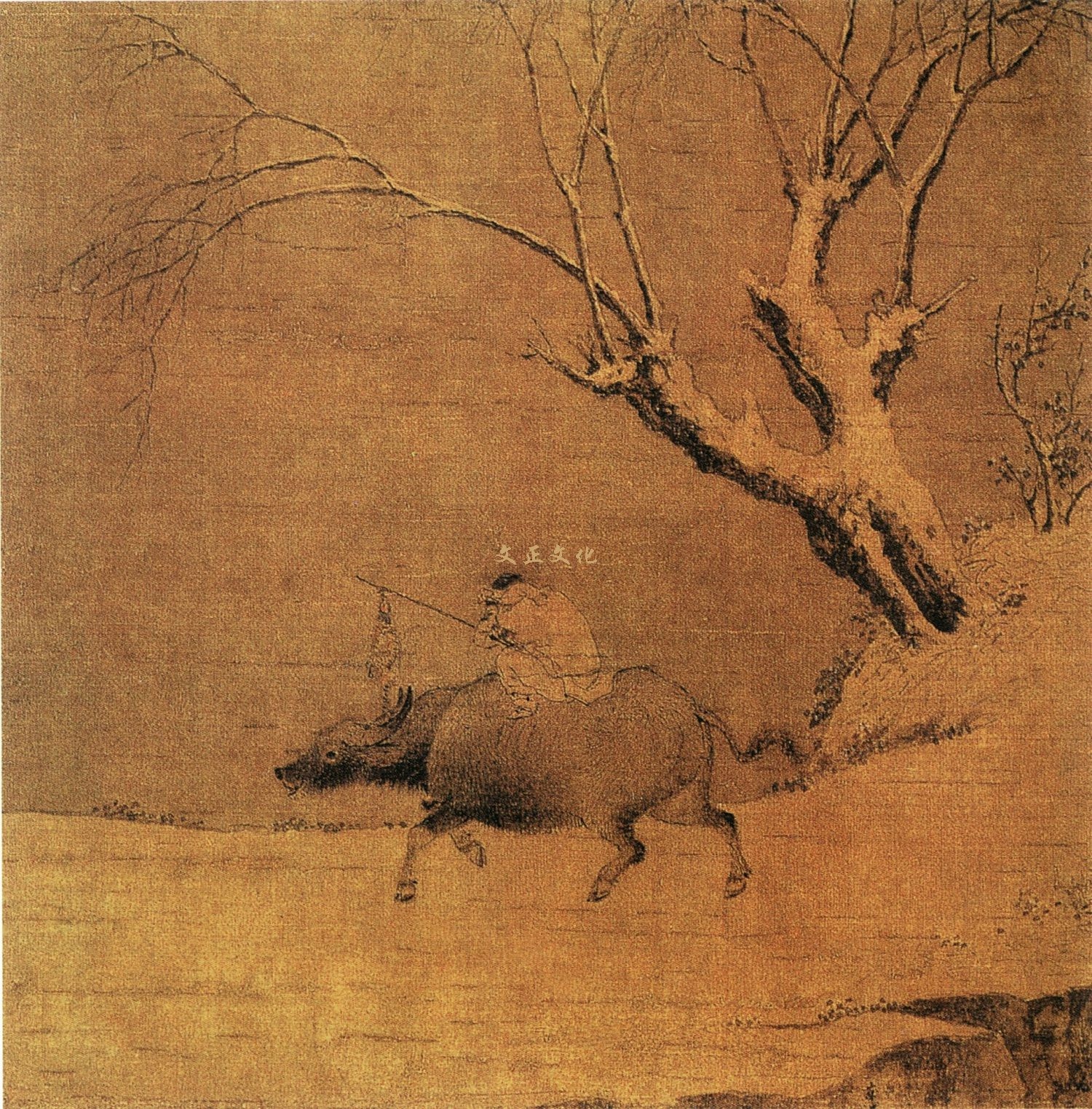
The "Snowy Trees and Cold Birds" (in the Shanghai Museum) and "Returning from Pasturing in the Snow" (in the Yamato Bunkakan, Japan) by Southern Song painter Li Di.
Song Dynasty Industry
A key technology of the steam engine is the flywheel, which converts linear motion into rotational motion, and this technology was already realized in the Song Dynasty and was widely used. The Song people extensively utilized water power to drive pounding, grinding, water lifting, spinning, and blowing in many tea grinding workshops, flour mills, textile workshops, and even some smelting workshops. By the late Southern Song period at the latest, water-driven large spinning wheels had been applied in the textile handicraft industry.
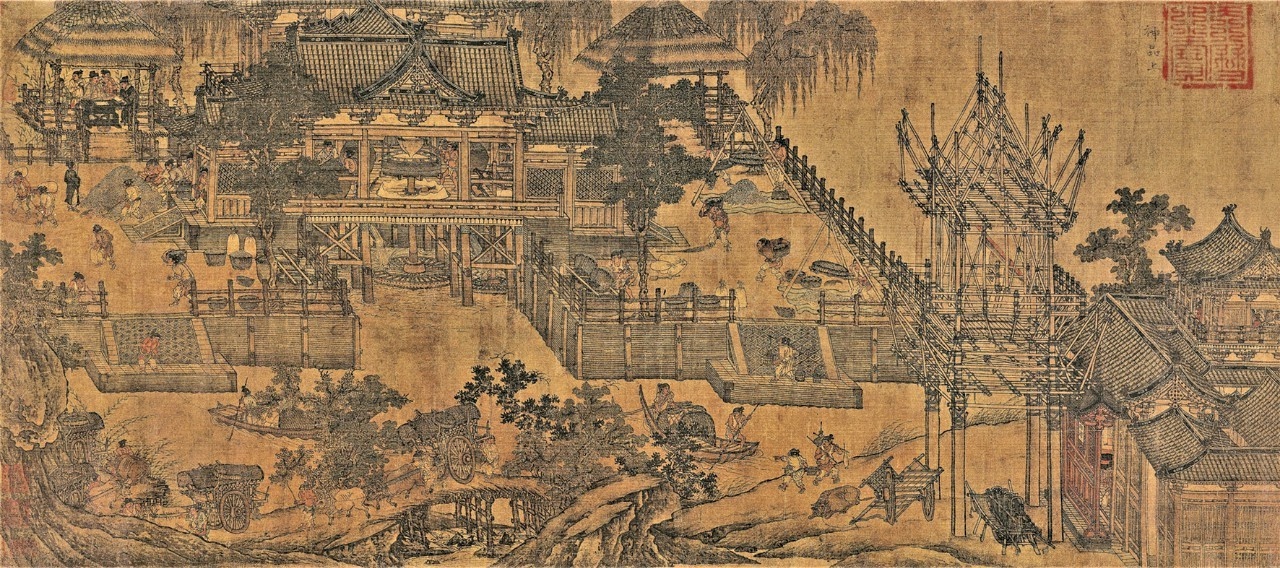
The "Water Mill at the Gate" is a remnant, showing a state-run water mill workshop, which is very impressive. From this, we can see the government's eagerness to compete for profits in the water mill market. Wu Gou said:
From today's perspective, the performance of the Song government is clearly like a greedy merchant, competing with the people for profits. Some Song dynasty scholars also criticized the court's behavior of building water mills. However, from a historical perspective, the experiences of modern Western Europe and Japan show that it is precisely the government's profit-seeking merchant nature that triggered the transformation of classical agricultural societies and the formation of modern industrial and commercial societies. In fact, the rise and fall of water mills in the Northern Song were always closely related to the alternation of new and old parties; whenever the new party was in power, they would build water mills; when the old party came to power, they would abandon state-run water mills. And we know that although the new party's new policies had countless problems, their overall direction was to attempt to use state power to develop mining, manufacturing, transportation, commerce, services, and capital markets. If this direction had been pursued, it might have led the country to become a modern industrial and commercial society ahead of time.
By the time of the Qing and Ming Dynasties, water mill workshops were rarely seen in historical records, nearly disappearing. Some believe that the water-driven large spinning wheel of the Song Dynasty could only process hemp and not cotton. As the cotton textile industry replaced the hemp textile industry, the water-driven large spinning wheel also exited the historical stage. However, why couldn't the technology of the water-driven large spinning wheel be slightly improved to make it suitable for the cotton textile industry? It should be noted that the British Arkwright water-powered spinning machine was improved based on the technology of China's water-driven large spinning wheel. British sinologist Imo Ke said: "Although this machine (the water-driven large spinning wheel) was not very effective, if it had been further developed in the direction it represented, then medieval China might have experienced a true industrial revolution in textile production four hundred years earlier than the West." During the Ming and Qing Dynasties, the proportion of industrial and commercial taxes in total revenue was negligible, and there was clearly no motivation to promote the improvement of water wheel technology.
Living Standards
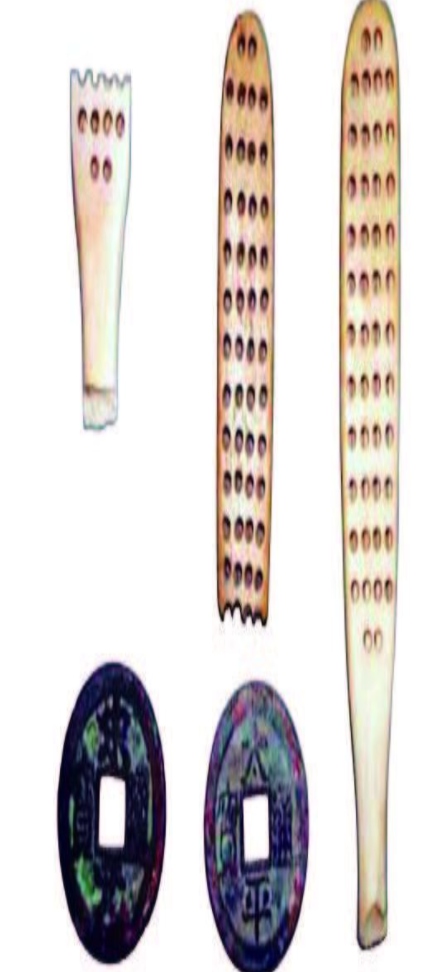 The daily life of ordinary people in the Song Dynasty included brushing their teeth with toothbrushes, fishing with rods, eating fruits chilled with ice, using vegetable oil for lighting, and being able to visit royal gardens, with even running water in the cities. The pinnacle of Chinese tea culture was during the Song Dynasty. In the "Along the River During the Qingming Festival," we can see the daily life of Song Dynasty citizens. What I find interesting is that the signs and brand advertisements were posted on the lamps. Of course, they would light up at night, which is not much different from today's neon lights.
Finally, I want to say that whether it is the Song, Liao, Jin, or Yuan, they are all dynasties in Chinese history, and their emperors are all Chinese emperors. From today's national perspective, the Liao people are Chinese, the Jin people are Chinese, and the Yuan people are also Chinese; it is not only the Song people who are Chinese. The Yuan Dynasty simultaneously compiled the "History of Song," "History of Liao," and "History of Jin," and did not regard the Song Dynasty as the orthodox. Because the Yuan Dynasty had remnants of the Three Kingdoms, intellectuals among the remnants of various countries believed that their former countries were the true orthodoxy of China. The famous line
"What is love in this world, that it makes one give their life for it"
was composed by the Jin Dynasty poet Yuan Haowen, inspired by seeing a goose on the way to the exam. Is this not a Chinese poem?
Some Western sinologists say that the best model for Sino-American relations is the Song-Liao model, and many people in China are indignant. But then I think, if Sino-American relations were the Song-Liao model, then the United States would become an inseparable part of China. Therefore, this metaphor is inappropriate, not because it implies that contemporary China is like the historically weak Song, but because the Song Dynasty was not weak at all. The indicators that modern people care about, such as urbanization rate, per capita GDP, human rights conditions, and commerce and industry, all show that the Song Dynasty was the pinnacle of all dynasties in Chinese history. Militarily, the Song Dynasty bore the brunt of the Mongolian cavalry sweeping across the Eurasian continent for 50 years, and it is hard to say that the military strength of the Song was weak; it can only be said that it was not strong enough; every dynasty has its own destiny.